RoboMaster Online Simulator
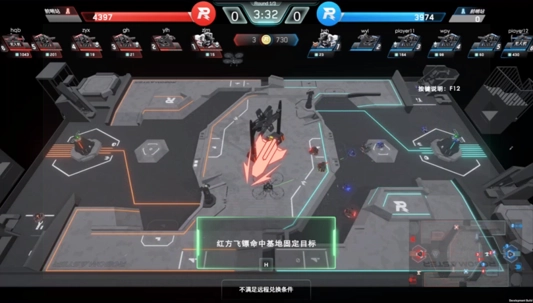
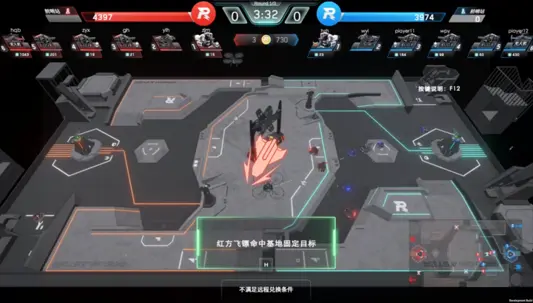
I built and maintained the online RoboMaster simulator used by Team Jiao Loong for RoboMaster 2025. It became the main platform for operator practice, internal scrims, decision dataset collection, and RL experiments.
Why we needed it
2025 rule changes made last season’s data mostly obsolete. We needed a place to:
- Run realistic internal matches and Swiss-round scrims
- Record full match states for sentry decision labeling
- Train operators before regionals and nationals
- Host friendly matches with other schools
Core modules
| Module | What it does |
|---|---|
| Scene modeling | 2025 arena, robots, rune, and game objects in Unity |
| Motion control | Mecanum chassis physics and actuator control |
| Auto-aim | In-sim turret / targeting pipeline for realistic fights |
| 2.5D navigation | Top-down tactical map + path planning overlays |
| Online sync | Multiplayer rooms over Unity Online Services |
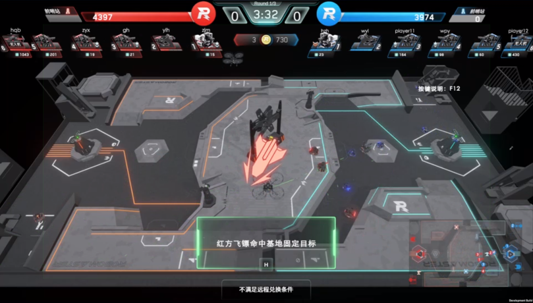
| UI / referee | Match HUD, HP, timers, and server-side rule checks |
Online multiplayer
We upgraded the simulator from LAN-only to public online rooms. The hard part was collision handling under client-side physics: moving control and collision to the server caused too much latency, so we kept client simulation with anti-clipping safeguards (speed limits + auto separation).
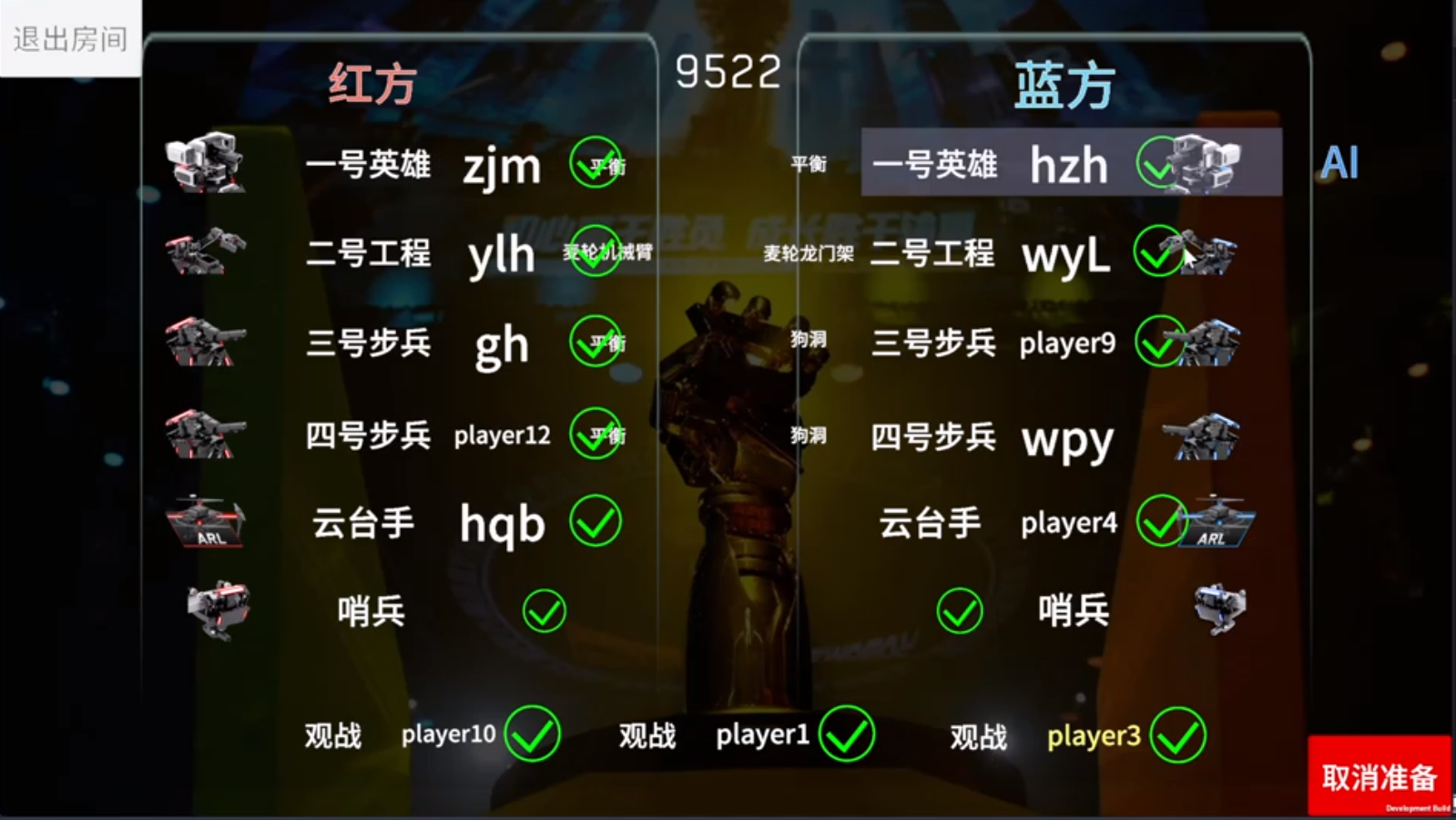
It was not perfect, but good enough for data collection and operator training.
In-match view
AI / data generation
The simulator also feeds the decision stack:
- Match logging for neural task labeling (70+ labeled games)
- Bot framework with team-level strategy, per-robot traits, and delayed task switching to avoid chaotic flickering
- Value-map target selection (HP, level gap, position) before the full hierarchical bot stack
- RL environments exported to Gymnasium for PPO training
Role in the larger system
The simulator connects directly to the sentry decision pipeline: collect → label → train → test in Foxglove/Unity → deploy on the real robot.
Team internal project — code not public.
← Back to projects