Sentry Decision System
I led the sentry decision system for Team Jiao Loong at RoboMaster 2025. The goal was to make the sentry more than a patrol bot: it needed to contest runes, cross terrain, prioritize threats, and stay alive under full-match pressure.
Core idea: two-level decisions
We combined behavior trees and machine learning instead of using either alone:
- High level (task selection): choose what to do — activate the rune, push mid, defend base, resupply, hunt the hero, etc.
- Low level (action execution): turn that task into navigation goals, auto-aim priorities, and referee interactions.
Behavior trees keep the system stable and debuggable; learning handles the messy trade-offs that are hard to hand-tune.
Task decision (neural scoring)
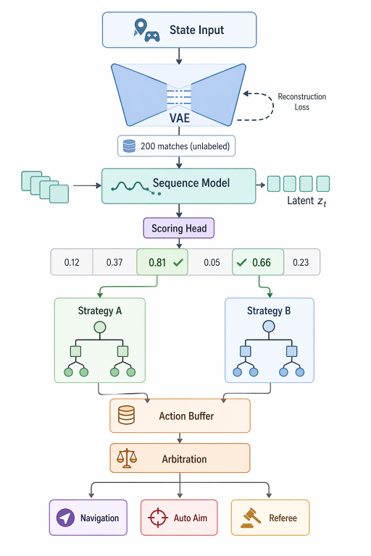
The high-level model takes a normalized 39-dim match state — time, economy, ammo, and all robot positions/HP — and outputs scores for candidate behavior subtrees.
Key pieces:
- Data pipeline: 70+ simulator matches with manual labels, plus augmentation from our online simulator
- Models tried: MLP, ResNet, LSTM, Transformer encoder — all reached ~95% test accuracy, but sim behavior mattered more than offline accuracy
- Semi-supervised ideas: VAE reconstruction pretraining + confidence-based pseudo-labeling to reduce bad labels
The scoring head picks the best subtree; if chasing is impossible, it falls back to the highest-scoring navigation target.
Action execution (behavior trees + RL)
Low-level logic is implemented as BT subtrees. One example is hunt hero:
- Raise target priority in auto-aim
- Detect escape intent (filtered distance-to-supply + velocity angle)
- Switch to intercept mode and block the escape route
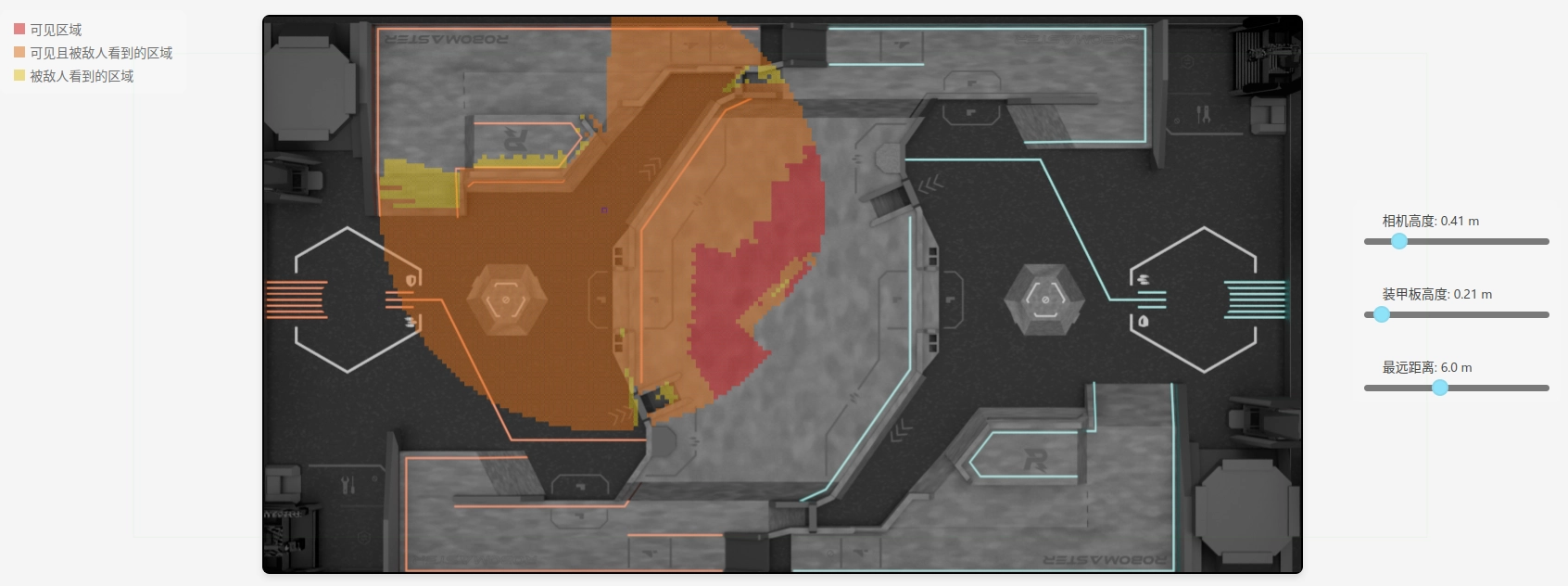
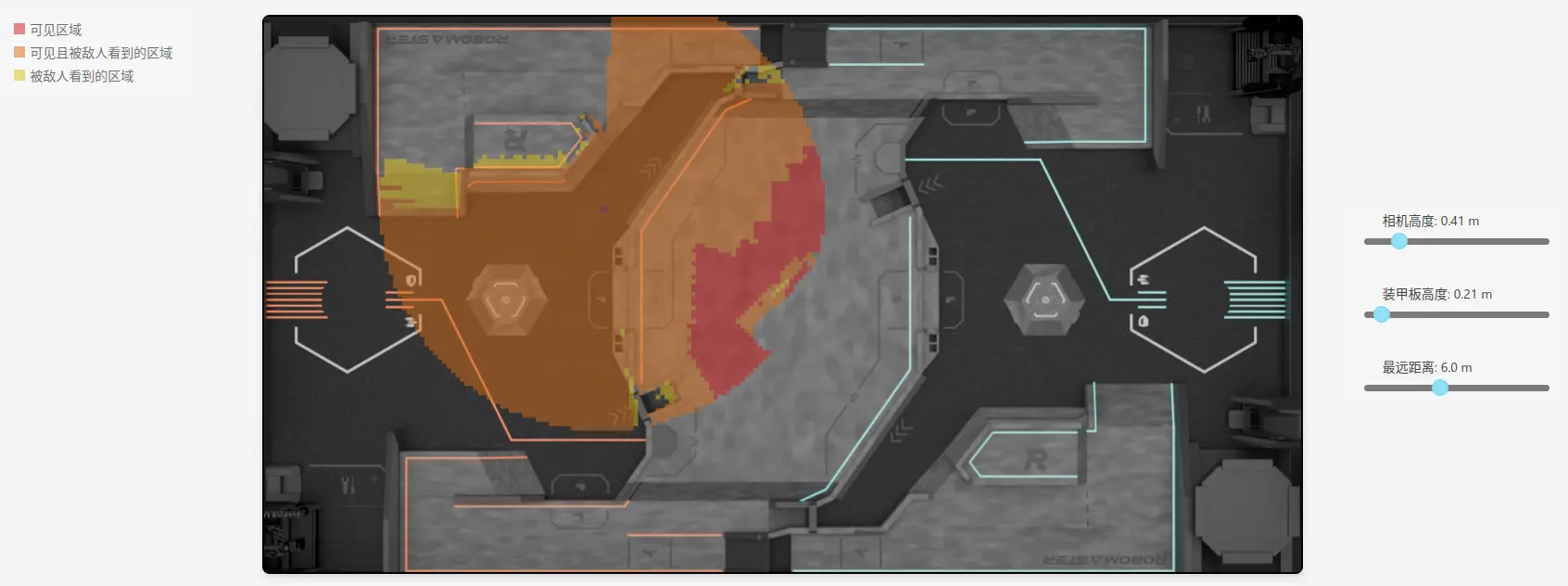
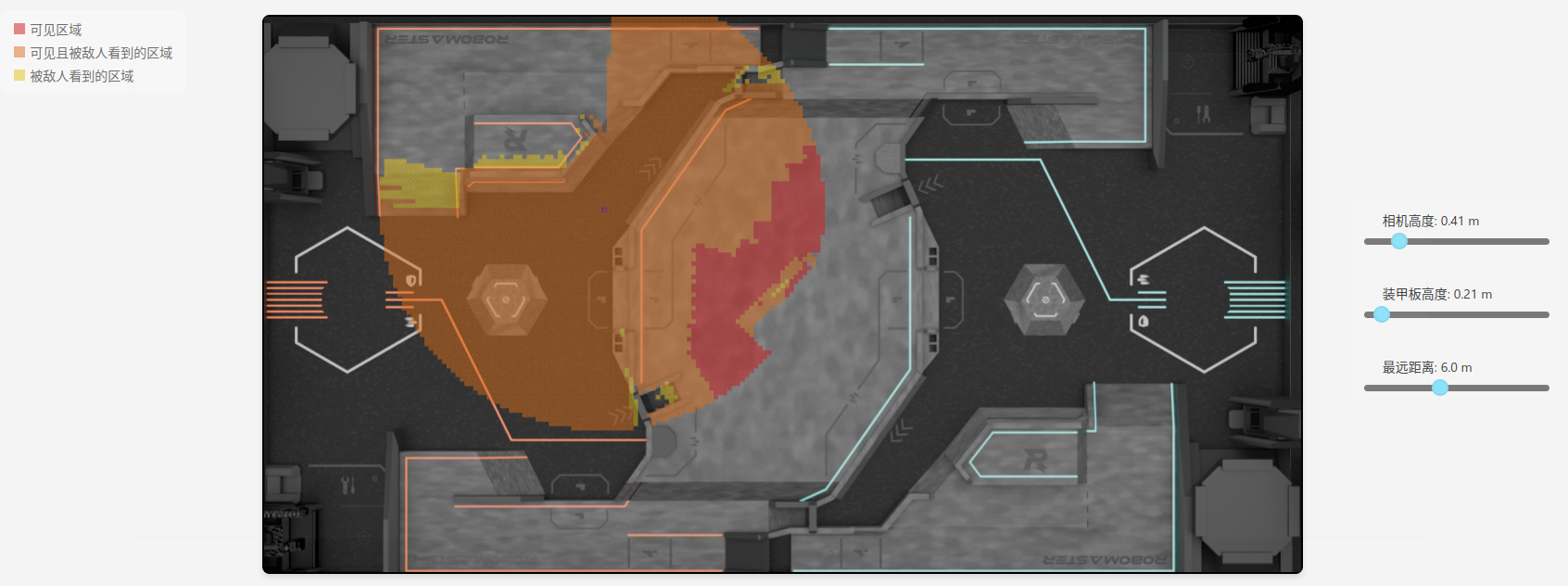
- Otherwise score candidate waypoints with a visibility map (height field + Bresenham ray checks)
For learned low-level policies, we moved from Unity ML-Agents to PPO in Gymnasium with stable-baselines3 — much faster iteration for target-point selection and aim priority.
Engineering stack
- Runtime: ROS 2 decision node
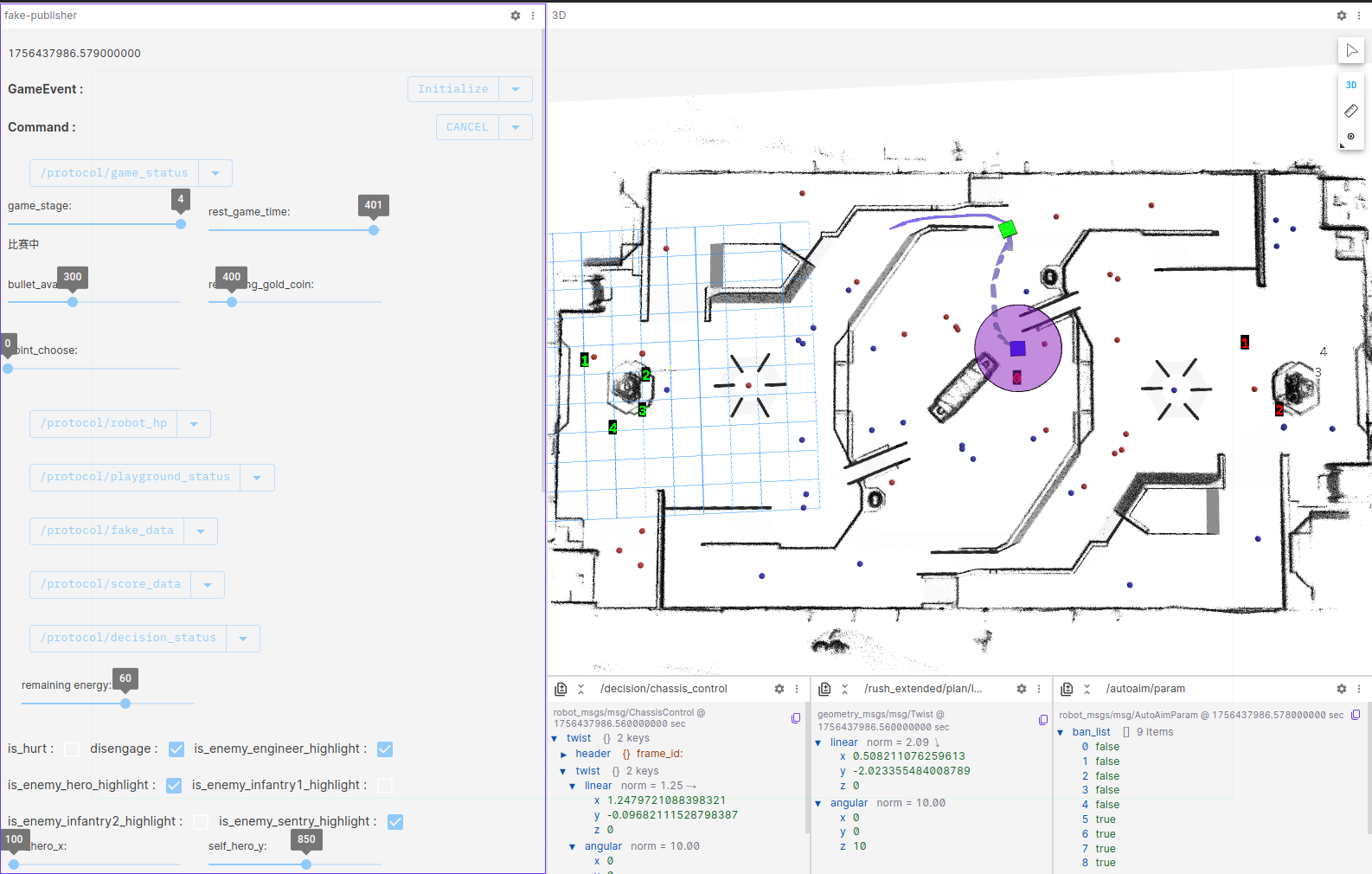
- Debug: custom Foxglove panels for match-state injection and 3D visualization
- Training data: online simulator + Qt labeling tool
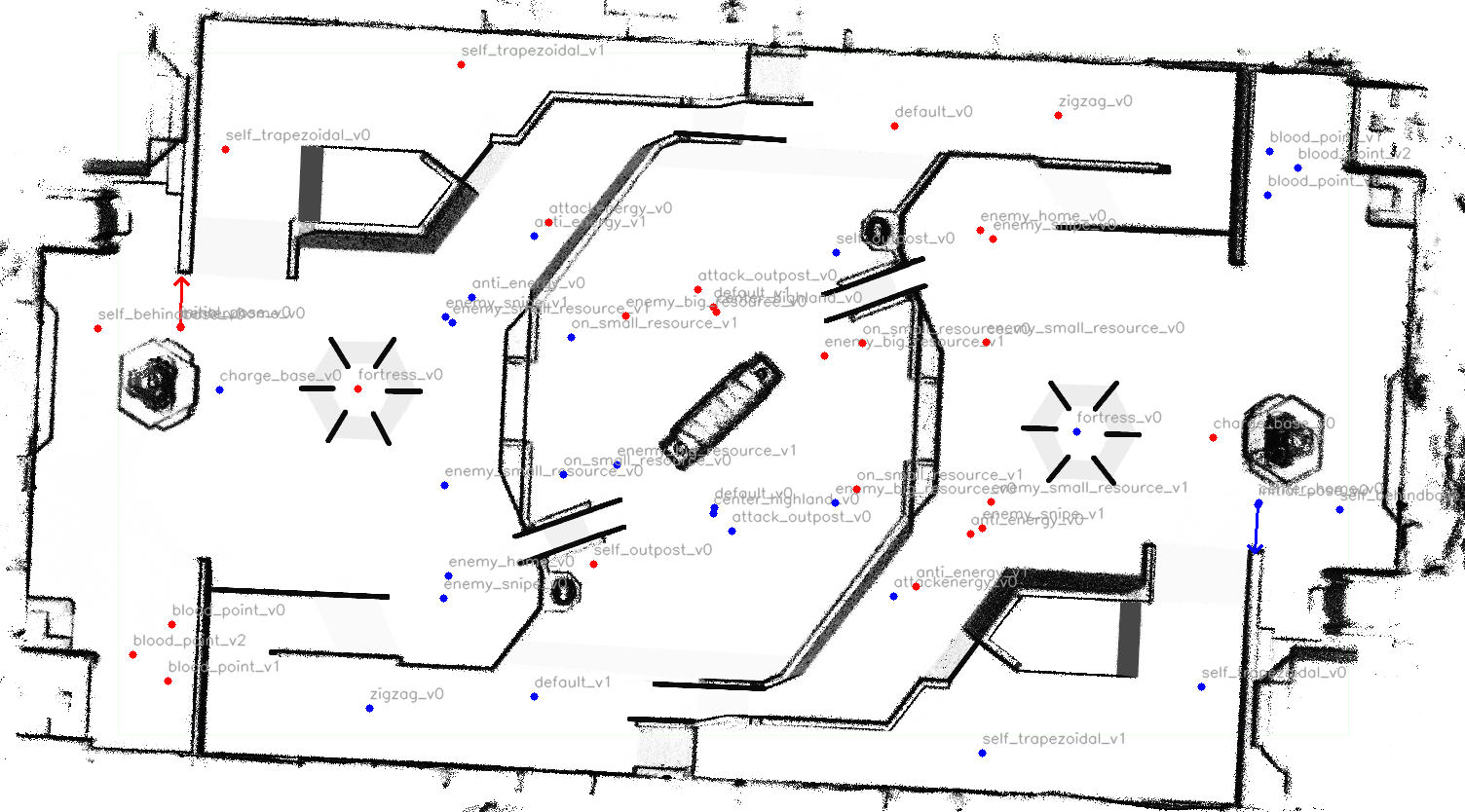
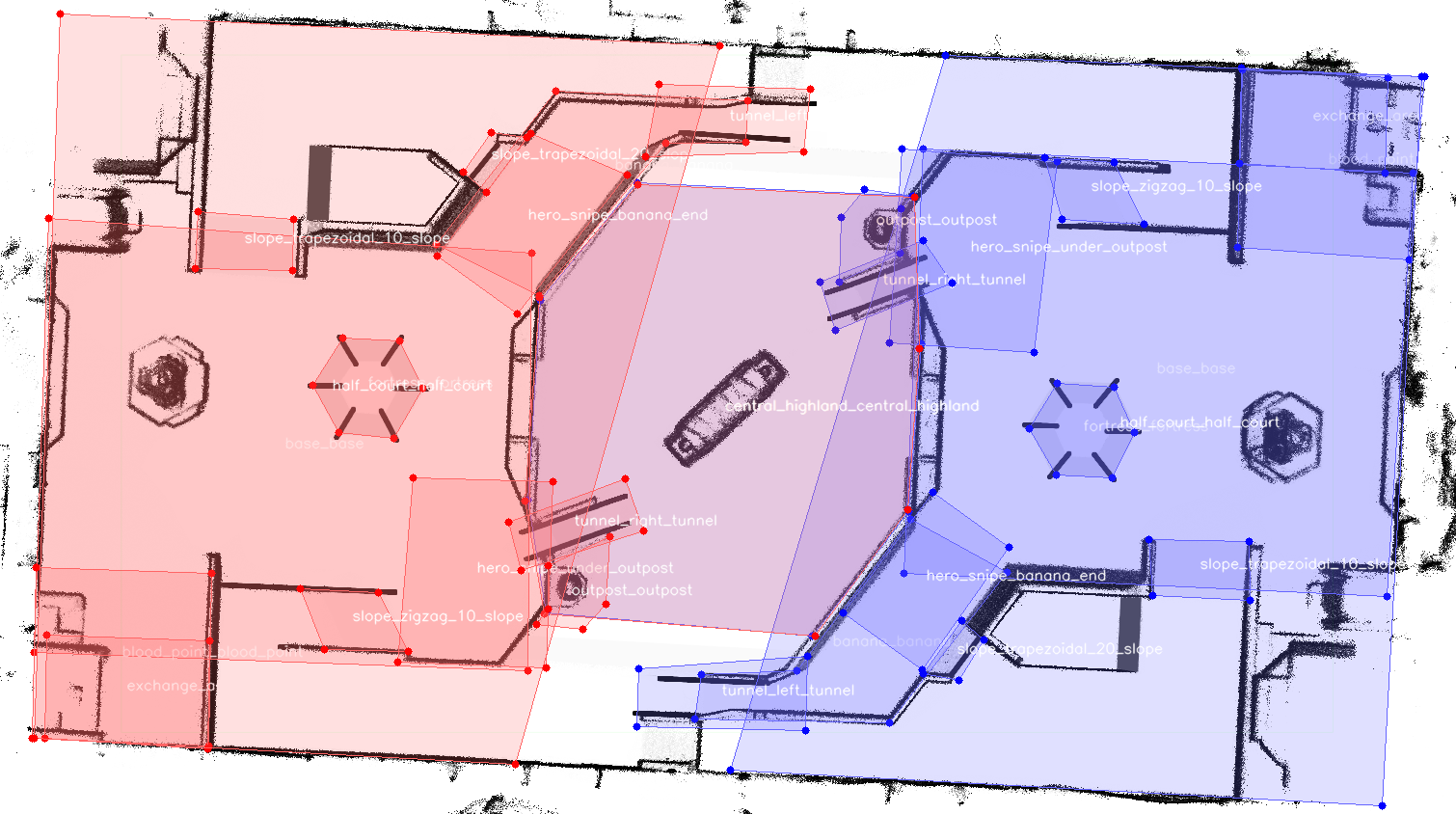
- Map tooling: OpenCV-based keypoint / region annotation for decision and navigation
Outcome
The system supported our 2024/2025 national championship seasons with rune contests, mid control, hero interception, and resupply logic integrated into one stack.
Team internal project — code not public.
← Back to projects